Lilies and black candles
On 18 November 1993 Nirvana taped MTV Unplugged at Sony Music Studios, 460 West 54th Street, at 10th Avenue, in Hell's Kitchen. Sony had opened the studio there that year, in a brick building that had once housed Fox Movietone. Beth McCarthy-Miller directed the performance. MTV broadcast it on 16 December.
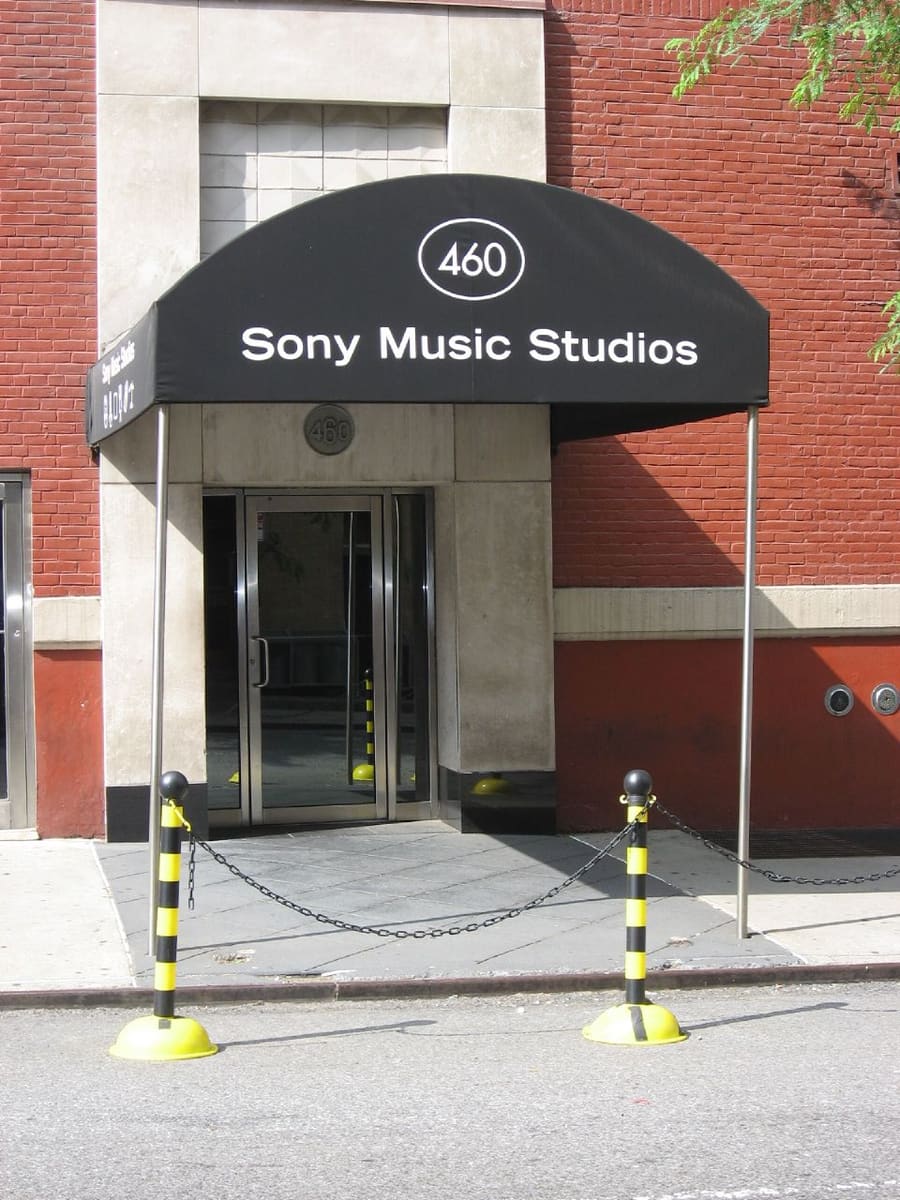
ToddHellsKitchen took that picture on 9 June 2007. The awning still said Sony Music Studios, and the number on it was 460. The studio closed that August. The photograph is the door, fourteen years later, not the night of the taping.
Kurt Cobain asked for stargazer lilies, black candles and a crystal chandelier. Charles R. Cross records that list in Heavier Than Heaven. Alex Coletti, who produced the show for MTV, remembered the flowers as star lilies, "these big white flowers." He told Guitar World that he asked, "You mean like a funeral?" Cobain's answer, he said, was "Yeah."
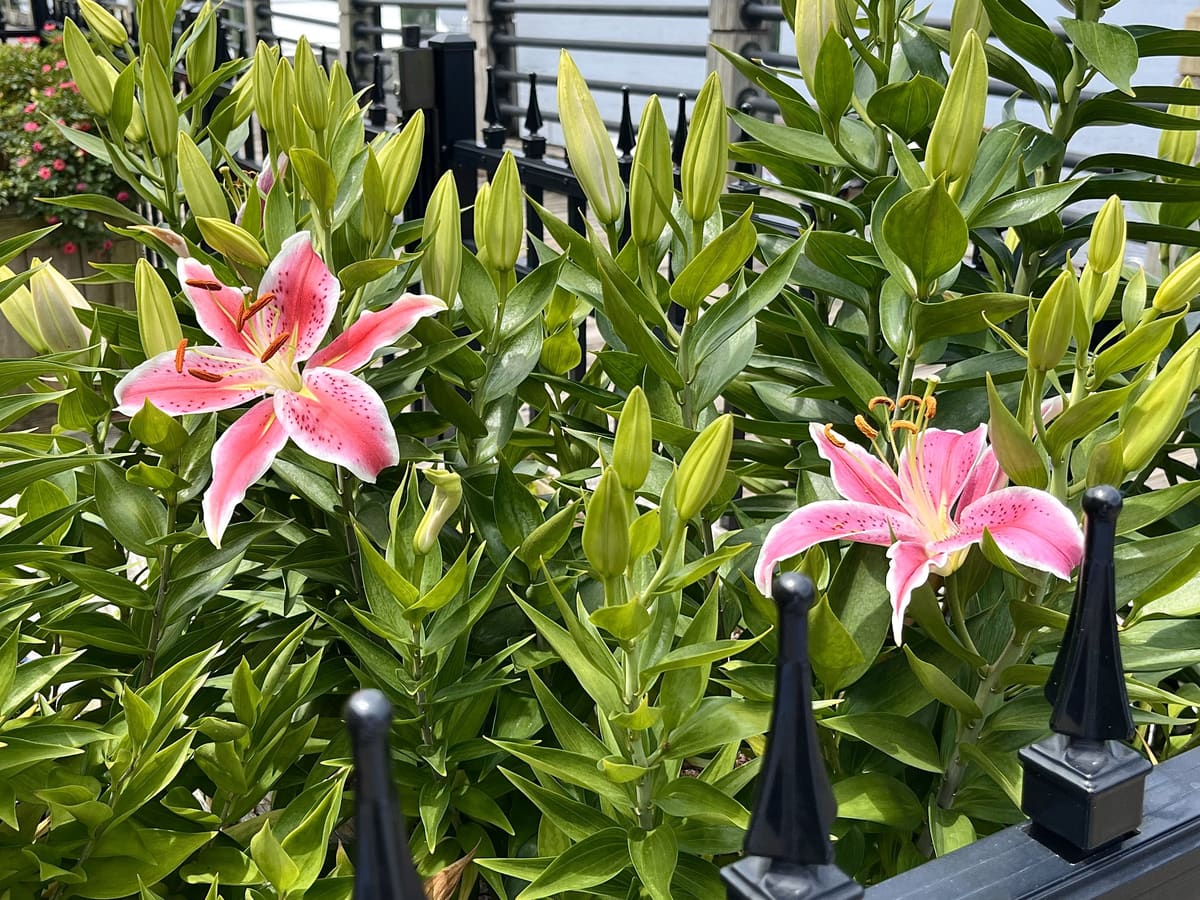
Staniulis photographed those lilies on 21 June 2022. They are the flower named in Cross's account. They were not in the studio.
The set was fourteen songs. A feature on the 2007 DVD says they were filmed in one take. One came from Bleach, four from Nevermind and three from In Utero. The other six were covers. "Come as You Are" was the only contemporary hit in the set. "All Apologies," already on the new album, was not yet a single. Dave Grohl played drums. Pat Smear played guitar, and Lori Goldston played cello. Both had been out on the tour.
The covers were the evening. "Jesus Doesn't Want Me for a Sunbeam" was the Vaselines. "The Man Who Sold the World" was David Bowie. Curt Kirkwood and his brother Cris then joined for three songs Curt had written for Meat Puppets II: "Plateau," "Oh Me" and "Lake of Fire." Curt played guitar. Cris played acoustic bass, and sang backup on "Plateau" and "Lake of Fire." Krist Novoselic moved to guitar for those three.
Rob DiCaterino made that portrait at the Mercury Lounge on 20 July 2006. Thirteen years had passed, and the room is not Sony Music Studios.
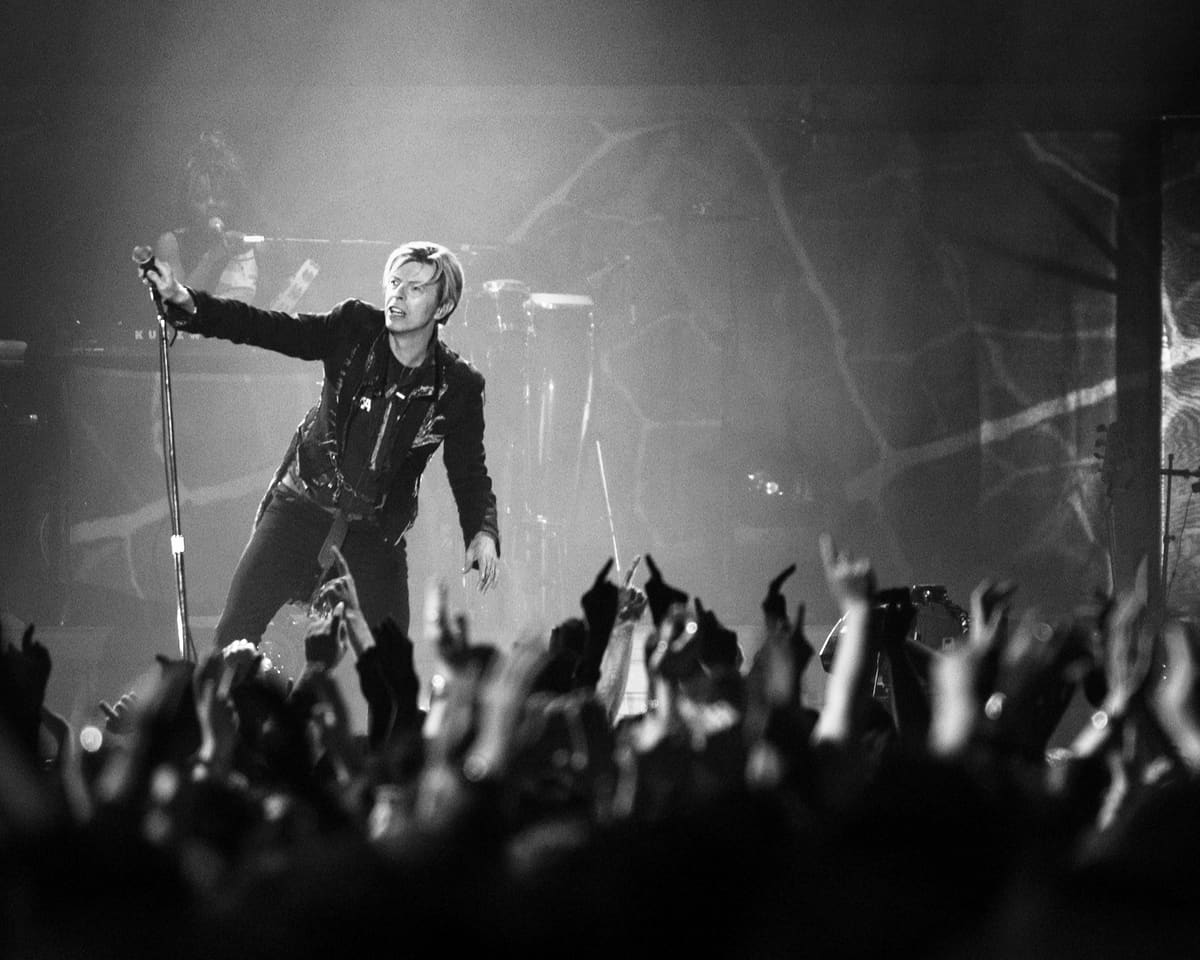
Roger Woolman's picture is Bowie a decade on, an arm out over a crowd. Commons dates the file 23 November 2003. Nirvana's version of "The Man Who Sold the World" was already ten years behind that night, and it had been played in a much smaller room.
The taping ended with "Where Did You Sleep Last Night," a traditional song the album credits to Lead Belly. The arrangement followed his 1944 recording. The song is also known as "In the Pines."
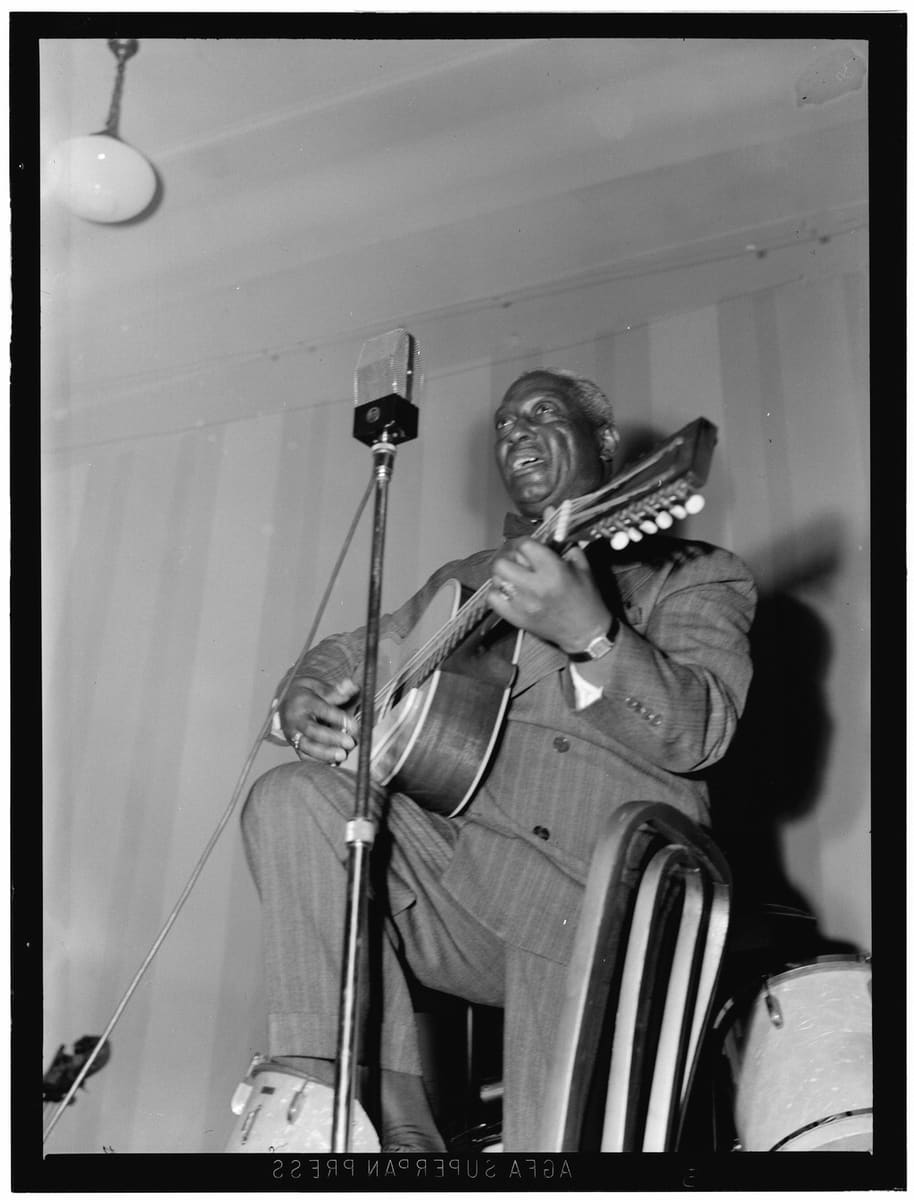
William P. Gottlieb photographed him there with a twelve-string and a microphone. The Library of Congress dates the negative only to the years between 1938 and 1948. It is not the 1944 session the arrangement followed, and it is not a frame from the Sony taping.
DGC Records released the album on 1 November 1994, the first Nirvana album to come out after Cobain died that April. It debuted at number one on the Billboard 200, on the chart dated 19 November, and was number one for one week. On the UK Official Albums Chart it entered at number one on 12 November, also for one week. At the 1996 Grammy Awards it won Best Alternative Music Performance, the only Grammy Nirvana received.