The summer Jurassic Park changed the picture
Friday, 11 June 1993, Jurassic Park opened in the United States. Two days earlier it had premiered at the Uptown Theater in Washington, D.C. Steven Spielberg directed, and Michael Crichton and David Koepp wrote the screenplay from Crichton's novel. Kathleen Kennedy and Gerald R. Molen produced it for Amblin Entertainment and Universal Pictures. It ran 127 minutes. John Williams wrote the score.
The dinosaurs took about fifteen minutes of that time. Industrial Light & Magic, supervised by Dennis Muren, made six of those minutes on computers, in fewer than 60 fully digital shots. Stan Winston's crew built the other nine minutes from full-size puppets and suits. Phil Tippett had been hired to animate the wide views in go-motion, a refined stop-motion, until a computer test at ILM took that job. Entertainment Weekly, in a piece dated 18 June 1993, described a Tyrannosaurus about 40 feet long, and noted that only a sickly triceratops, among the full-size animals, went to Kauai.
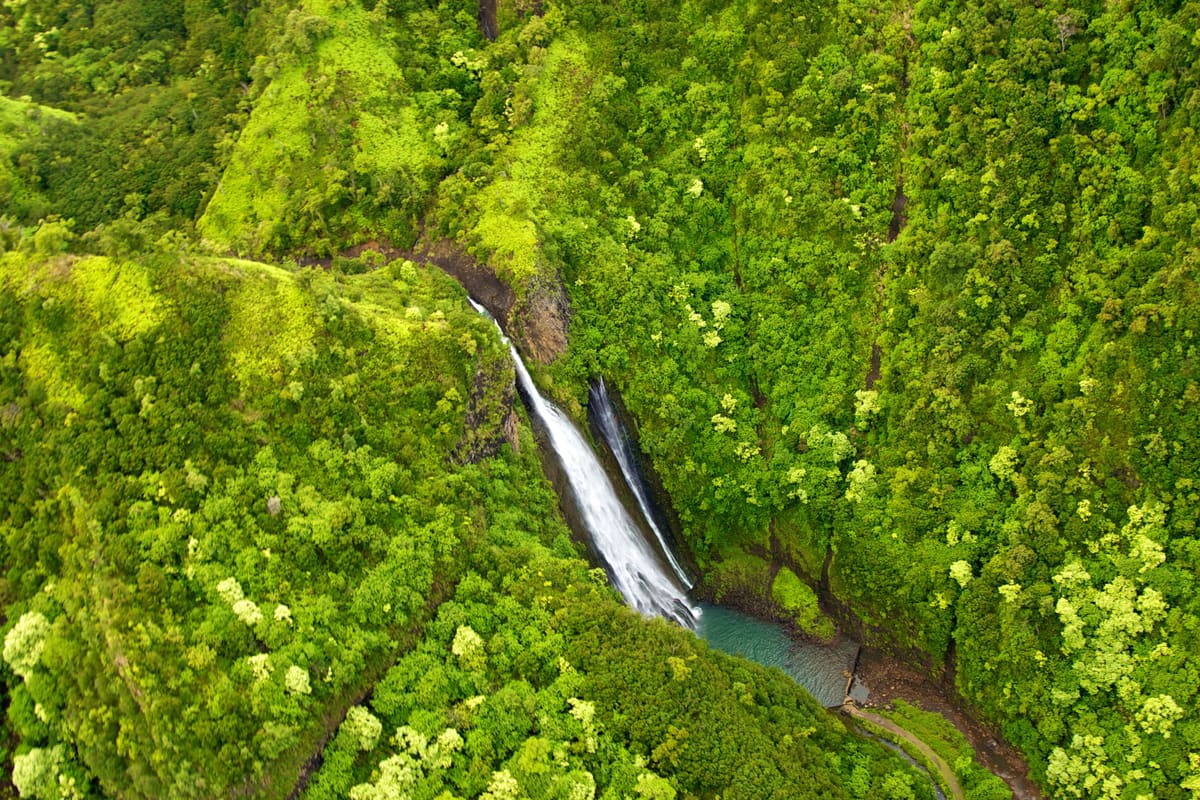
Filming began on 24 August 1992 at Olokele Canyon on Kauai, standing in for the fictional Isla Nublar. The company had about three weeks of daylight exteriors. The helicopter arrival was filmed at Manawaiopuna Falls, later known as Jurassic Falls. Julian Fong's photograph is from 10 May 2012. Same cliff. A later year.
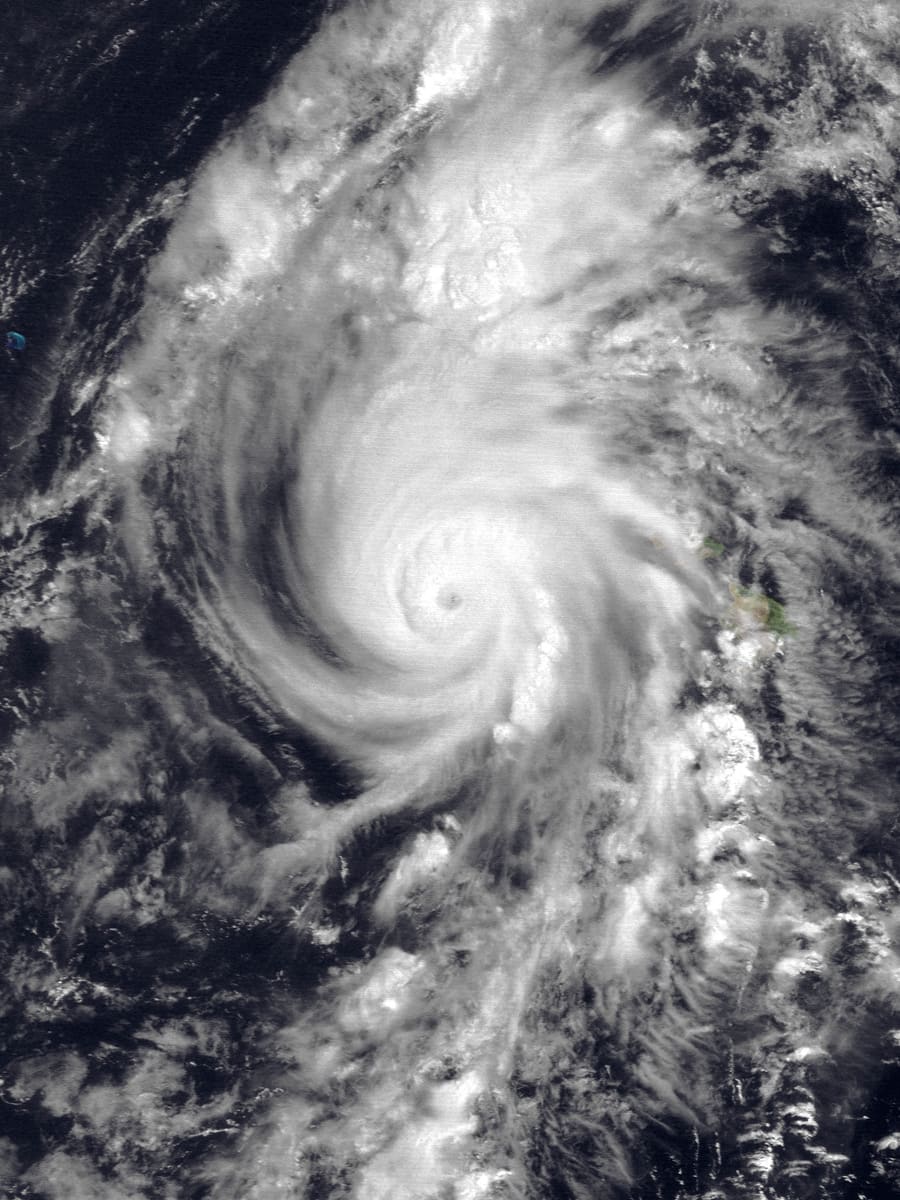
11 September was the last day scheduled on Kauai. Hurricane Iniki hit the island instead. The eye crossed the coast near Waimea just before 4 in the afternoon. A National Weather Service assessment called Iniki the most destructive hurricane to strike Hawaii in the twentieth century, the equivalent of a Category 4, with damage of about $1.8 billion. Seven people were killed. Spielberg, Richard Attenborough, Laura Dern, and Jeff Goldblum rode out the storm in a ballroom at the Westin Kauai. Associate producer Lata Ryan said they were in a concrete safe area with supplies for 18 hours, and that everyone at the hotel was safe. The image above is from that morning, before the eye came ashore.
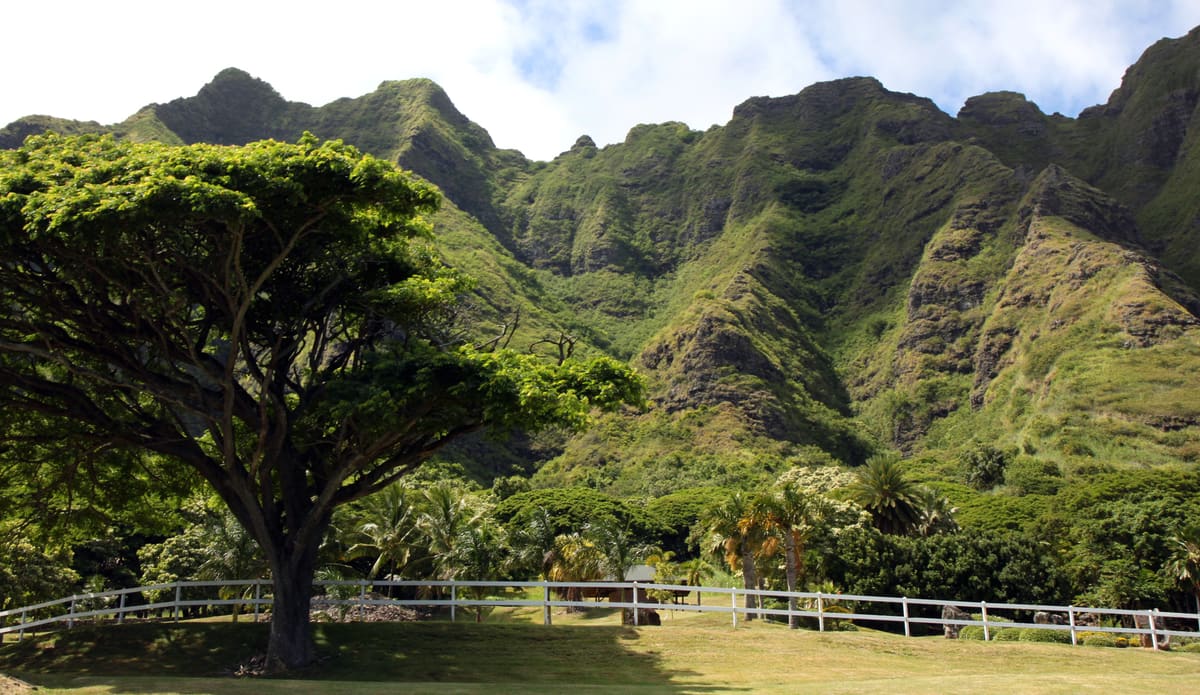
A Gallimimus stampede, the ostrich-like herd, had been planned for Kauai that day. About two weeks later it was filmed at Kualoa Ranch on Oahu, where the cliffs stood higher than the open plain the crew had meant to use.
The rest of the film was made in California, mostly on Universal's stages in Los Angeles. The Tyrannosaurus breakout was too big for them. On 27 October it moved to Stage 16 at Warner Bros. Rain machines made the storm, the foam skin soaked up the water, and the animatronic shook until the crew dried it between takes. The dinosaur was too heavy to roll to a new mark, so the crew moved the set around it.
The opening weekend came to $50,159,460 at 2,404 theaters, including $3.1 million from previews on the night of 10 June at 1,412 theaters. That broke the record of $47.7 million set by Batman Returns. The original run reached about $357 million in the United States and Canada, and about $914 million worldwide. After 115 days it passed E.T. the Extra-Terrestrial as the highest-grossing film yet released, and it held the rank until February 1998, when Titanic's sales were reported past it.
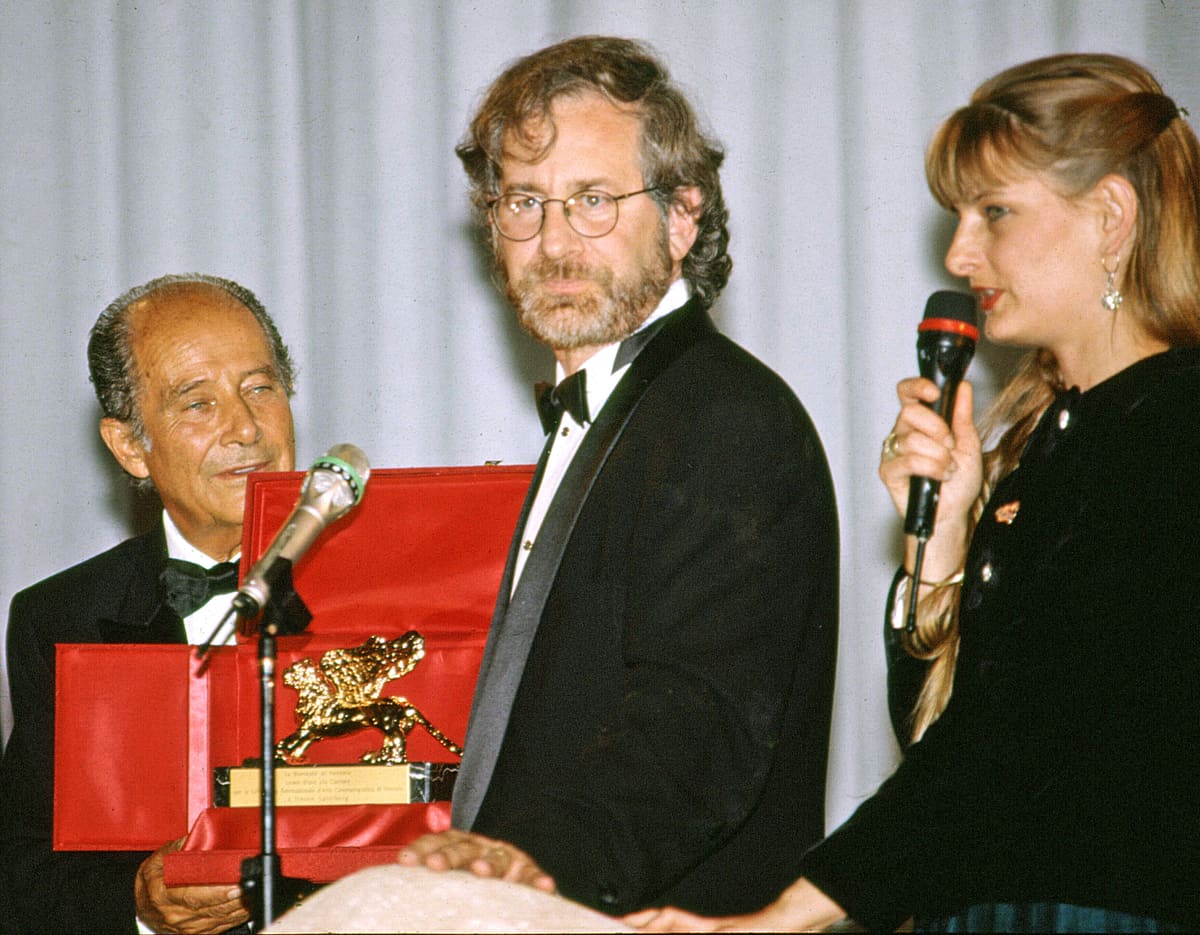
The photograph shows Spielberg at that Italian premiere. On 21 March 1994, at the Dorothy Chandler Pavilion in Los Angeles, the film won Academy Awards for visual effects, sound, and sound effects editing. Dennis Muren, Stan Winston, Phil Tippett, and Michael Lantieri shared the visual effects Oscar. Six minutes of computer dinosaur, beside Winston's puppets, had been enough to change the summer movie.