The summer the World Cup came to America
For one month in the summer of 1994, the World Cup belonged to the United States. It was the 15th edition of the tournament, the first time the country had hosted it, and it ran from Friday, 17 June, to Sunday, 17 July. Nine stadiums shared the 52 matches. By the end, 3,587,538 people had attended, an average of 68,991 a game, more than a million above the record it replaced. The stadiums were about 96 percent full.
The opener was at Soldier Field in Chicago, at 2 o'clock in the afternoon. Germany, the defending champions, beat Bolivia 1-0. Jürgen Klinsmann scored in the 61st minute, and 63,117 people were there. President Bill Clinton and Hillary Rodham Clinton watched from the stands.
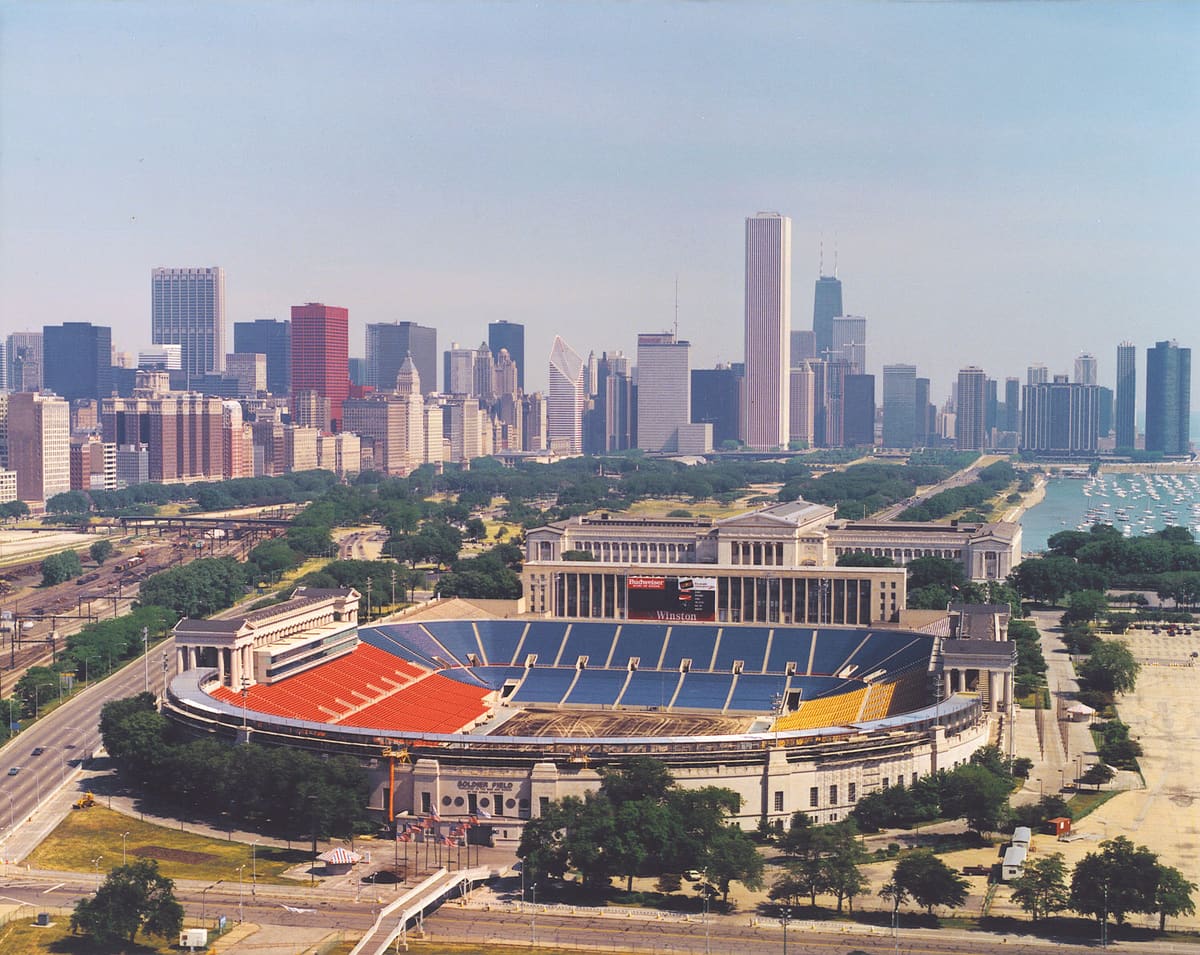
The photograph is from 10 October 1988. The colonnades in it are the ones the opener used. In 2002 and 2003 the inside of the stadium was rebuilt and that outer shell was kept, so the bowl in the picture is the older Soldier Field, not the stadium as rebuilt for 2003. On 17 June 1994 it was still that open ground on the lake, and it was where the month began.
The next day the World Cup went indoors. At the Pontiac Silverdome, in Pontiac, Michigan, the United States and Switzerland drew 1-1 in front of 73,425. Bregy scored for Switzerland and Wynalda equalized for the hosts. No World Cup match had been played under a roof before. The grass had been grown at Michigan State University and laid inside the building. The Silverdome held four matches, all of them in the group stage.
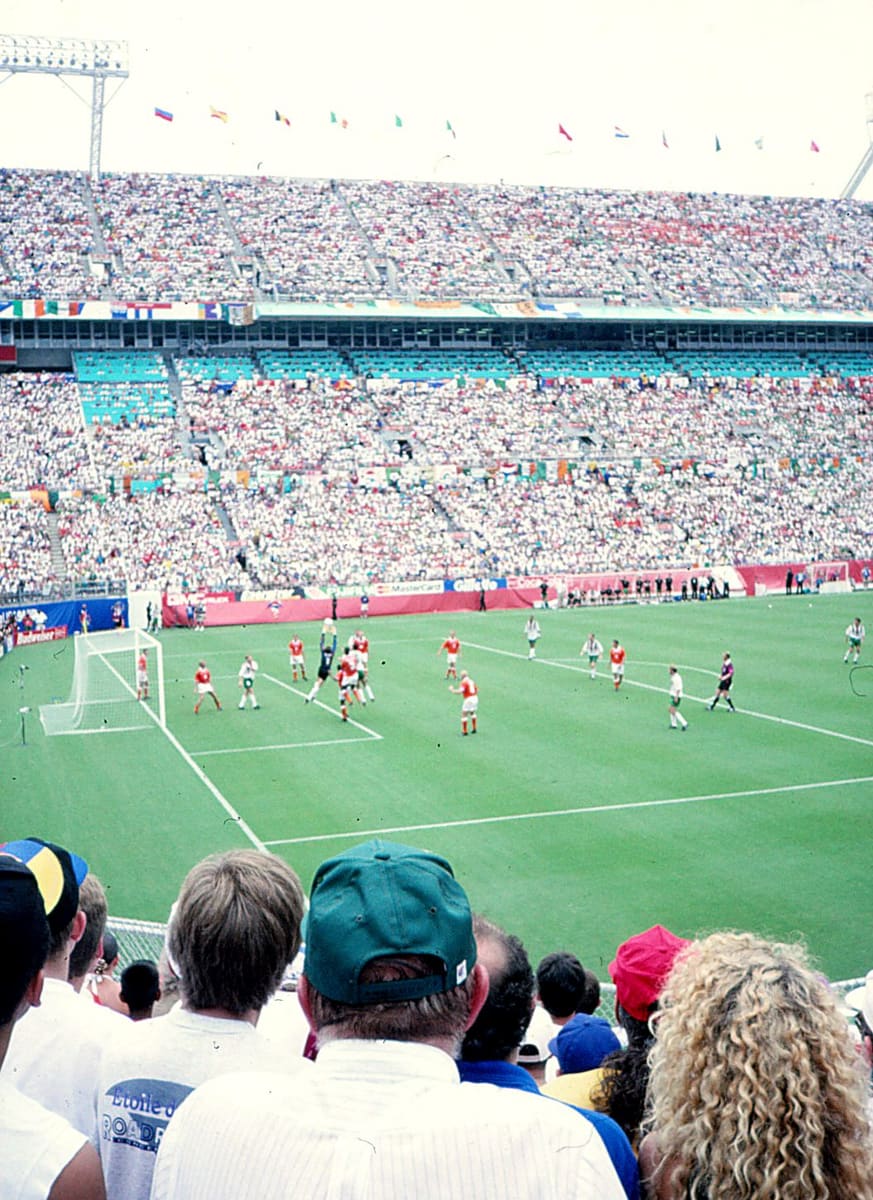
On 4 July, a Monday and Independence Day, 61,355 people filled the Citrus Bowl in Orlando for a round of 16. The Netherlands beat the Republic of Ireland 2-0, Bergkamp scoring in the 11th minute and Jonk in the 41st. From the seats the pitch looks huge, and the upper deck is one block of white shirts. That was the ordinary view of the month. Stadiums built for American football spent the summer full of soccer, on weekdays as well as weekends.
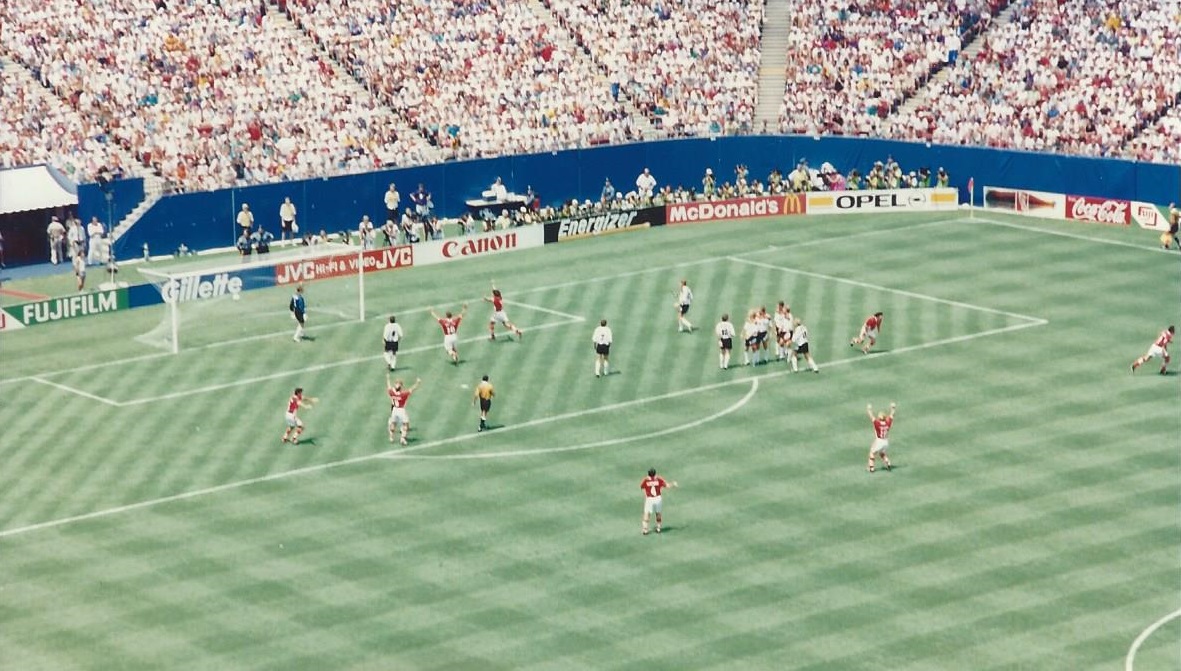
On 10 July, at Giants Stadium in East Rutherford, New Jersey, Bulgaria beat Germany 2-1. Bulgaria had never won a World Cup match before this tournament. Lothar Matthäus put Germany ahead from the penalty spot early in the second half. Hristo Stoichkov equalized from a free kick in the 75th minute, and Letchkov scored three minutes later. Jonathan Schilling's photograph is the moment after that free kick: red shirts with their arms up, and a far stand packed in the sun. The defending champions were out. Bulgaria were through to the semifinals.
The last match was on 17 July at the Rose Bowl in Pasadena. Kickoff was 12:30 in the afternoon, Pacific time. Brazil and Italy played 120 minutes without a goal, in front of 94,194. It was the first World Cup final settled by a penalty shootout. Brazil won it 3-2. Roberto Baggio took Italy's last kick and sent the ball over the crossbar. Brazil had won the World Cup for the fourth time.
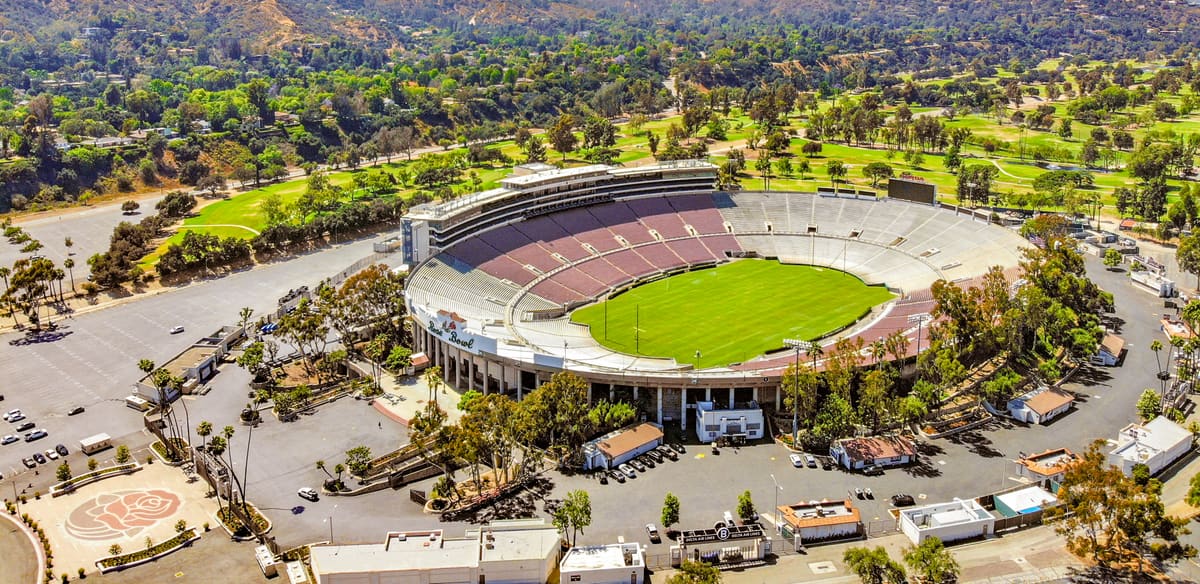
Ted Eytan's photograph is from 13 June 2018, not from the final. The bowl is still in Pasadena. The summer of 1994 is the part that stays put: it began under the columns at Soldier Field, went indoors onto grass grown at a university, filled an Orlando stadium on the Fourth of July, and ended when one penalty went over the bar.