2,131: the night Cal Ripken took a lap
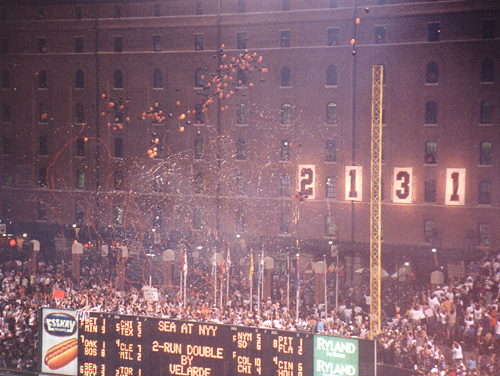
Wednesday, September 6, 1995, was the night the number changed. At Oriole Park at Camden Yards, Cal Ripken Jr. was in the Baltimore lineup for the 2,131st game in a row. Lou Gehrig's 2,130 had stood since 1939. A crowd of 46,272 was in the ballpark, President Bill Clinton and Vice President Al Gore among them. When the top of the fifth ended, the game was official, and the banners on the B&O Warehouse, behind the right-field seats, went from 2130 to 2131.
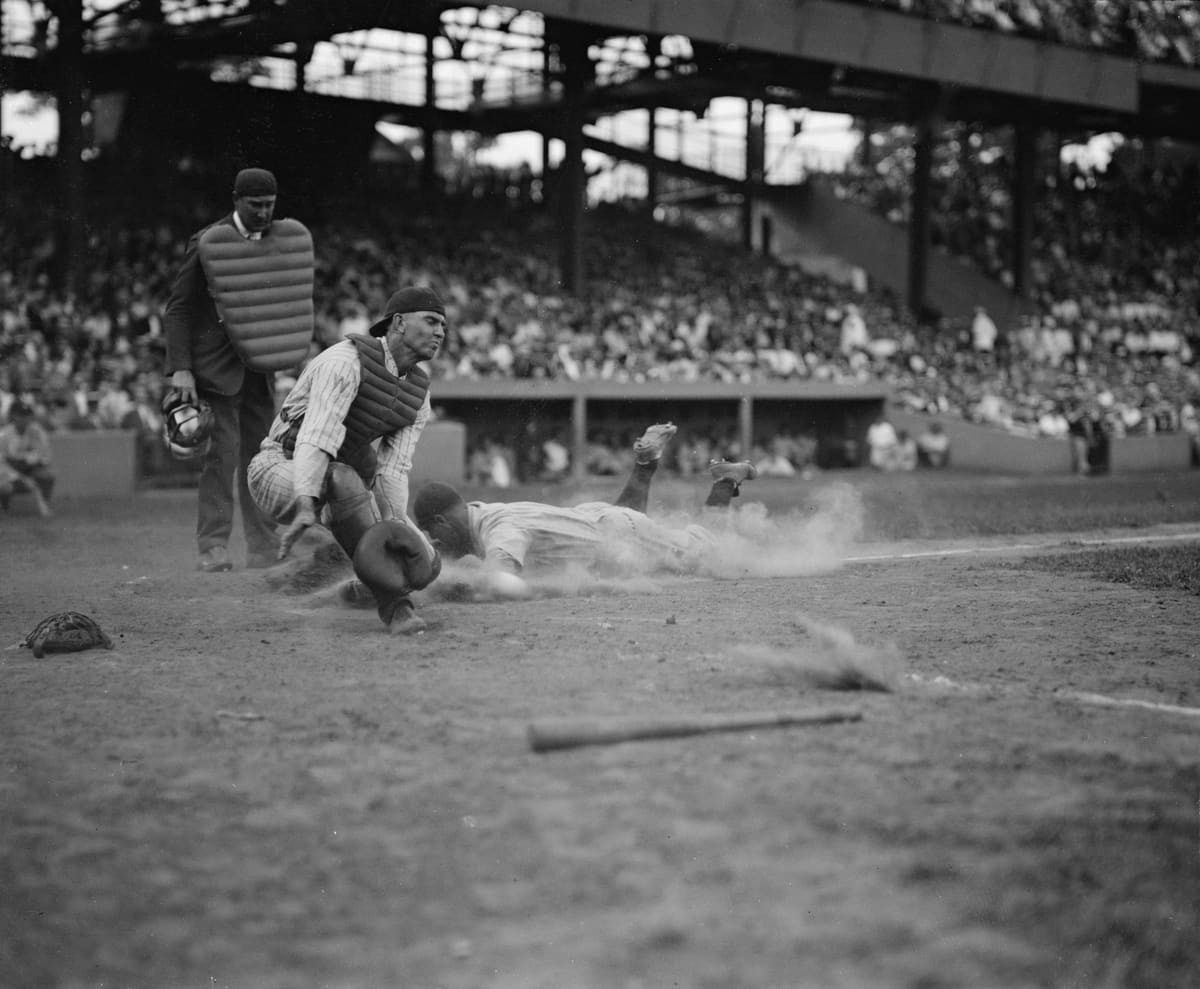
Gehrig's streak had started on June 1, 1925, and his last game in it was April 30, 1939. Fifty-six years is a long time for a number to sit still. Ripken's own run had begun on May 30, 1982, when he was a rookie third baseman. He moved to shortstop and stayed in the lineup. The players' strike in 1994 took a World Series off the calendar, and it did not break the streak, because a streak like this ends only when your team plays a game without you. In the summer baseball came back, the thing on television was a man who kept showing up.
The night before the record, Tuesday, September 5, he had only tied it. The Orioles shut out the California Angels, 8-0, in front of 46,804, and Ripken homered. Wednesday the Angels were back. First pitch was 7:35. His children, five-year-old Rachel and two-year-old Ryan, threw out the ceremonial first ball.
He homered again before the number flipped. In the fourth, Bobby Bonilla led off against Shawn Boskie with a home run, and Ripken followed, back to back, his 15th of the year, to left field. Baltimore led 3-1. The Orioles won, 4-2, and Mike Mussina got the victory.
The record arrived on the rule, once the Orioles were ahead and the Angels were retired in the top of the fifth. The banners changed. Fireworks went up, and balloons and streamers went with them. The next morning the Los Angeles Times timed the standing ovation at 22 minutes and 15 seconds. The game waited.
Ripken kept coming out of the dugout. He gave his jersey to his wife, Kelly. Teammates pushed a reluctant man onto the dirt track around the field, and he took the lap: slapping hands with fans, hugging the umpires, the Angels applauding in front of their own dugout. After midnight he told reporters it had never been his goal "to surpass Lou Gehrig or become Lou Gehrig".
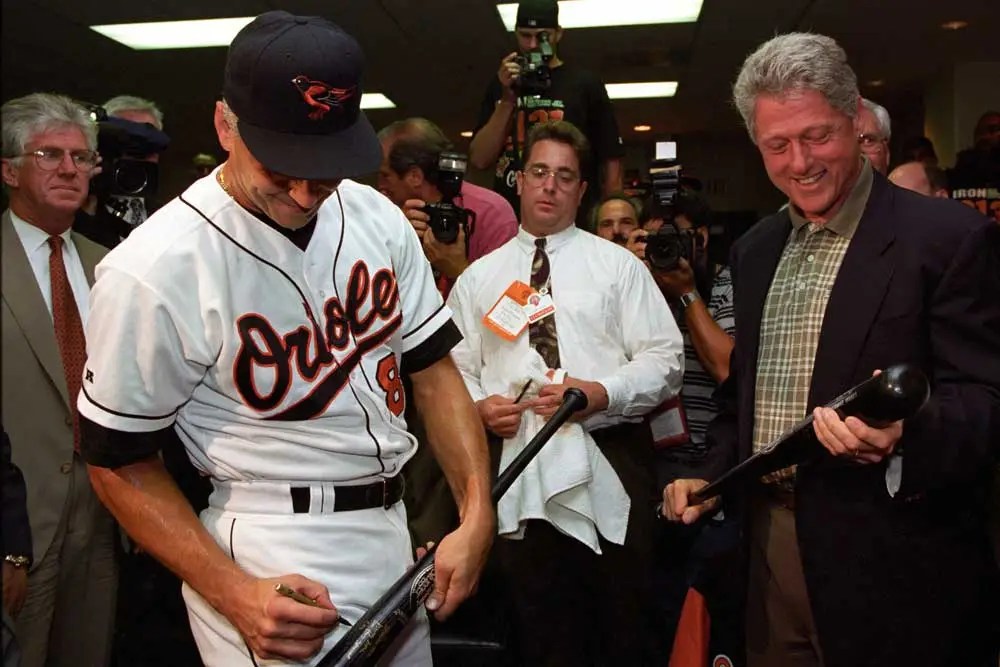
He was still the everyday shortstop the next summer. The streak did not stop at 2,131. He ended it himself on September 20, 1998, before the last home game of the season, against the Yankees. He told manager Ray Miller it was time. The number stayed at 2,632, which was 502 games past Gehrig. Ryan Minor, a rookie, started at third base in his place, and New York won, 5-4. Ripken's last game inside the streak had been the night before.
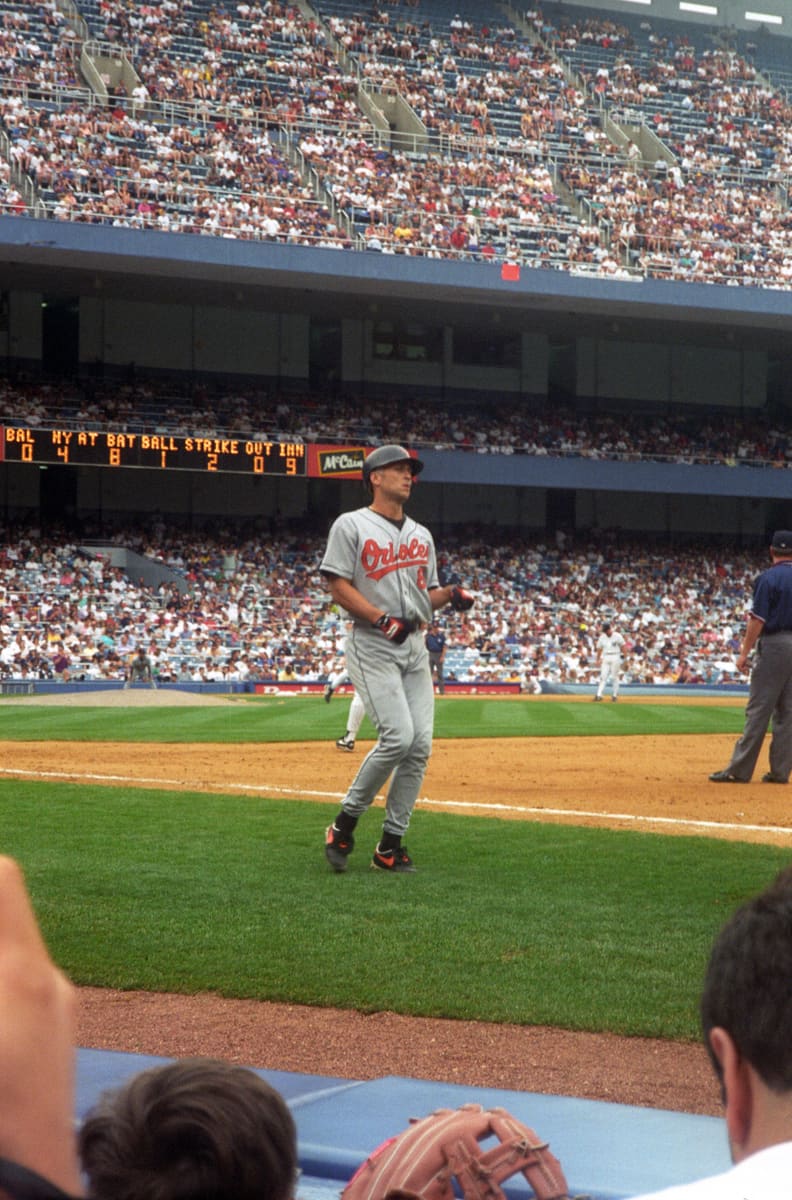
If the game was on in your house, you remember the wait. Twenty-two minutes is a long time for a baseball broadcast to hold still. Then a shortstop walked the dirt track with the whole park on its feet, and a warehouse in right field put up four digits.