Woodstock '94 and the weekend of mud
From 12 to 14 August 1994, Woodstock '94 was held on Winston Farm in Saugerties, Ulster County, next to the town of Woodstock. The Daily Freeman said it was billed as "2 More Days of Peace and Music," with a Friday added to the weekend. The date marked the original festival, 15 to 18 August 1969, on Max Yasgur's farm in Bethel.
A three-day ticket was $135, and the crowd outran the tickets. The Los Angeles Times reported the next morning that producers estimated more than 350,000 people had gathered before the numbers thinned early Sunday, while the State Police said the crowd never passed 300,000. Ticket sales, the Times added, fell nearly 50,000 short of the 250,000 the producers had hoped to sell. John Miggins, of Stone Ridge, told the Freeman he saw people streaming through a large hole in the fence before he had been inside five minutes. "It was already a free concert." By Sunday, hundreds of security guards had left the gates. The Times wrote that, despite the promoters' denials, the last day was essentially free.
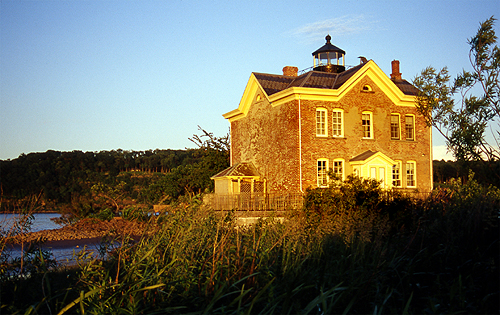
Skip Willits photographed that lighthouse on 1 October 1997. The farm was inland, 840 acres by the Times's count, and rain fell all Saturday night and through Sunday until the fields were lakes of mud. John Scher, of PolyGram Diversified Ventures, which had put up $30 million, said, "The system really started to break down because of the rain." Brian Aplustille, 22, of Long Island, was taking some home. "I'm keeping a jar of mud," he said. "And these sneakers are being retired."
On Saturday the mud reached the music. Melissa Etheridge, the Freeman wrote, spoke of her "mud people." When Primus played "My Name Is Mud," Les Claypool told Billboard twenty years later, huge chunks of sod started flying, and some of that mud was still in his speaker cabinets. He said it stopped after he told the crowd that people who throw things on stage have "small and insignificant genitalia."
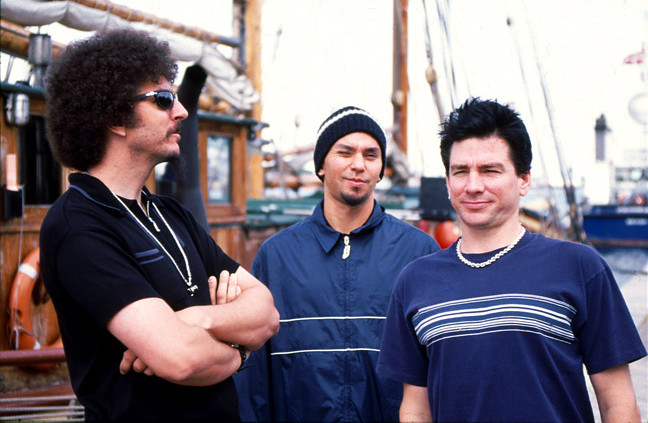
Frederik Dam Sunne took that picture at Langelinie in the summer of 1998.
Nine Inch Nails played Saturday night, with Metallica after them. Jon Pareles wrote in the next morning's New York Times that the band "snarled its bitterness." Reznor had told Rolling Stone he took the date for the money: "To be quite frank, it's basically to offset the cost of the tour we're doing right now." He told MTV that on the way to the stage he tripped, pushed Danny Lohner's face into the mud, and was body-slammed in return. They played covered in it. Rolling Stone later counted a 15-song set that closed with "Head Like a Hole."
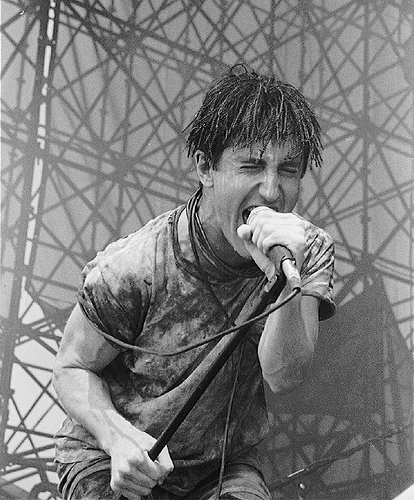
Rik Goldman took that picture on the 1991 Lollapalooza tour.
Joe Cocker, a veteran of the 1969 festival, was on Saturday's bill. Michele Darling, who had come from Kingston through a hole in the fence, told the Freeman she saw him.
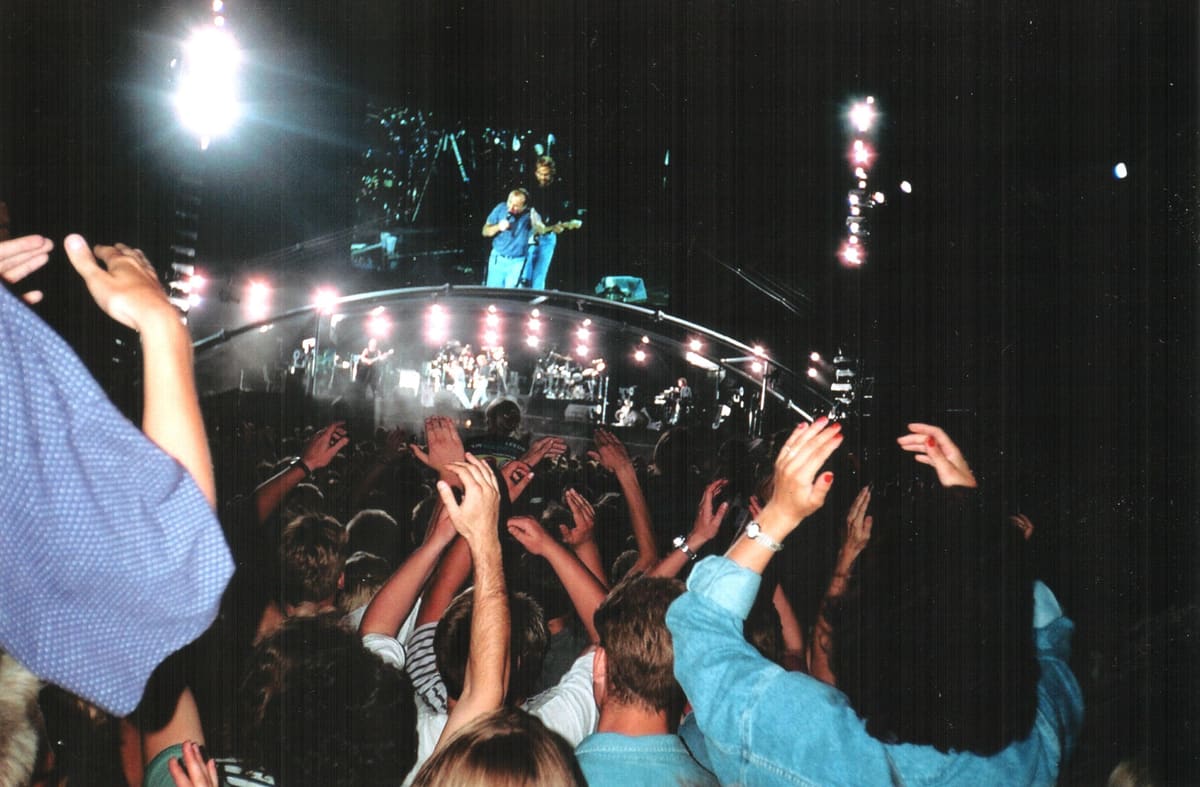
Derzsi Elekes Andor made that picture from the crowd in Kiel on 29 July 1992.
Sunday afternoon was Green Day. Pareles wrote that the crowd threw mud and straw, and that Billie Joe Armstrong threw it back, smashed a microphone, and exposed himself while the rhythm section kept playing. He then told them that if they chanted for the band to shut up, Green Day would stop, cued them with a "1,2,3," and the band quit when they did. Rolling Stone's profile of 26 January 1995 added that a security guard mistook bassist Mike Dirnt for a fan, tackled him, and smashed his front teeth.
Bob Dylan, absent in 1969, played Sunday night.